Russian scientist says Milky Way's black hole poses no threat to Earth
🎧 Listen to this article
A dedicated English MP3 is generated for this article.
0:000:00
Tap listen to prepare the audio.
A senior researcher at the Russian Academy of Sciences said the supermassive black hole at the center of the Milky Way will not swallow Earth, addressing a common misconception about its gravitational reach.
Sergey Sazonov, head of the Experimental Astrophysics Laboratory at the Space Research Institute of the Russian Academy of Sciences, said the black hole's gravitational pull is limited to a very narrow region rather than extending across long distances. He noted that the radius of its gravitational influence spans a circle of roughly one light-year, while the galaxy itself has a diameter of tens of thousands of light-years.
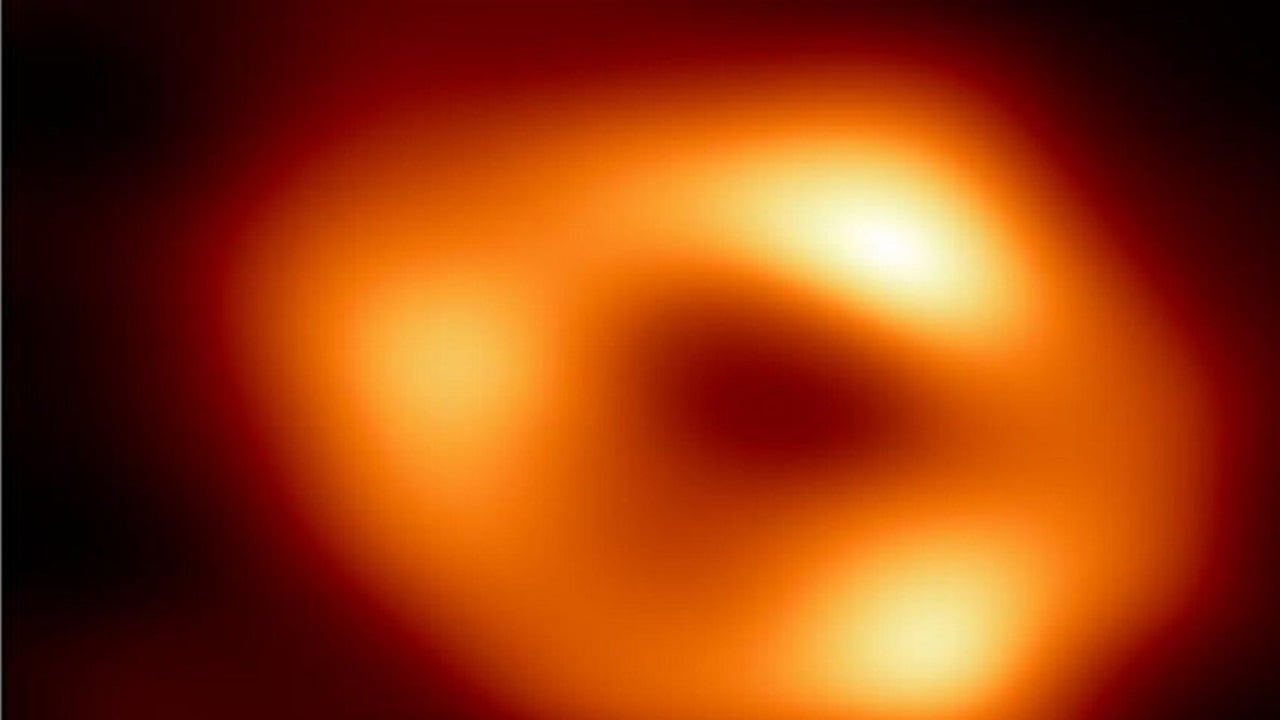
Earth sits approximately 25,000 light-years from the black hole, Sazonov said, adding that its effect is therefore unfelt and that there is no cause for concern. He explained that the black hole becomes observable through the strong radiation emitted by an accretion disk that forms when gas flows into it.
Sazonov added that the Milky Way's central black hole is not currently gathering large amounts of matter, as it may have already consumed most of the nearby material.