NASA warns phone cameras without eclipse glasses can cause permanent sensor damage
🎧 Listen to this article
A dedicated English MP3 is generated for this article.
0:000:00
Tap listen to prepare the audio.
A solar eclipse on Saturday will track from near the North Pole southward across Russia, Greenland, Iceland and Spain before ending over a small area of northeastern Portugal, with observers along that path seeing a total eclipse and much of Europe, North Africa and the Arab world witnessing partial coverage, according to NASA.
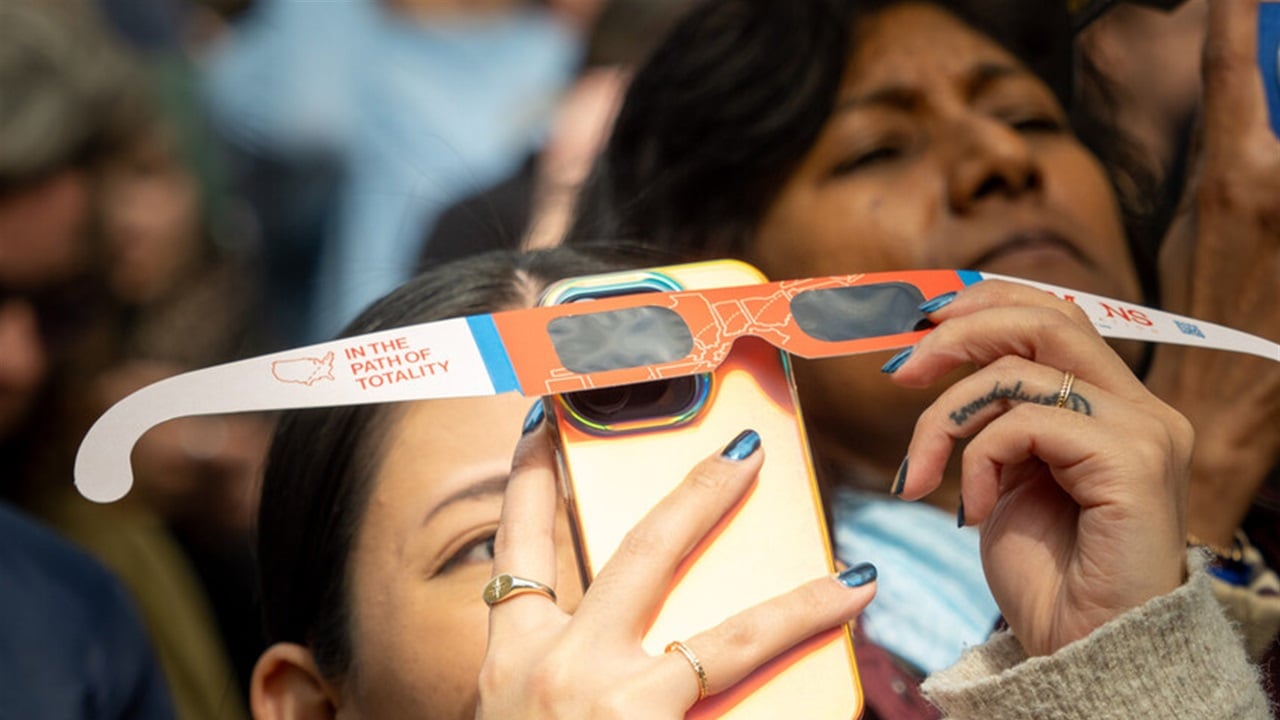
NASA cautioned that aiming a phone or camera lens directly at the Sun outside the brief window of totality can overheat device sensors and burn out pixels, rendering the equipment permanently unusable. The agency recommended placing eclipse glasses in front of any camera lens during photography and using the same glasses when viewing the Sun through binoculars or a telescope.
Agency officials noted that lenses can concentrate sunlight and direct intense rays onto both the glasses and the eye, so additional eyewear is unnecessary on equipment already fitted with a proper solar filter. The only safe interval for unprotected viewing is the one to three minutes of totality, when the Moon fully covers the Sun — an event visible only from the narrow path crossing Iceland and Spain.
Spain will experience its first total eclipse in more than a century, while Algeria, Morocco, Tunisia and Mauritania will see high-percentage partial eclipses before sunset and Libya a very low percentage.