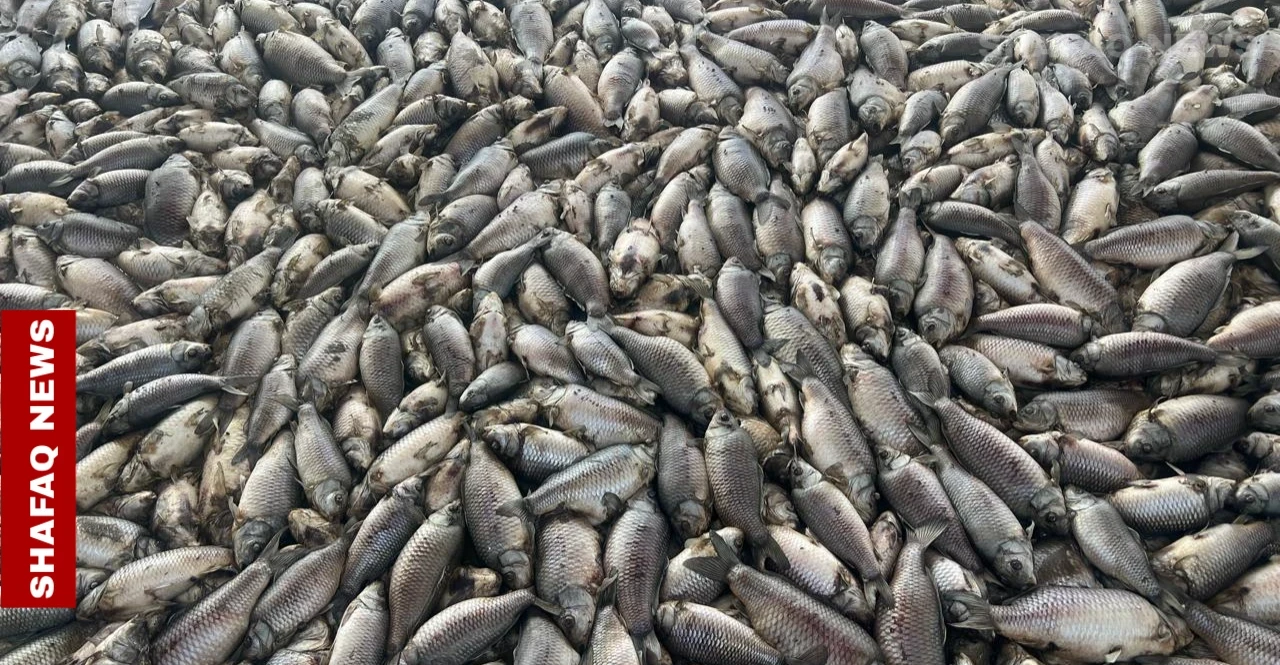
Iraq's Green Observatory warns fish deaths have become an annual pattern
🎧 Listen to this article
A dedicated English MP3 is generated for this article.
0:000:00
Tap listen to prepare the audio.
BAGHDAD, Iraq — Iraq's Green Observatory said on Saturday that mass fish deaths in the country's rivers and marshes have become a recurring annual pattern, reflecting the combined pressure of a water crisis and pollution. The observatory recorded two waves of die-offs this year.
In April, more than 1,000 tons of fish died in the Tigris and Diyala rivers in Wasit province due to untreated sewage and industrial waste, the observatory said. It reported that water releases from the Hamrin Dam flushed accumulated pollutants into the Tigris, causing more than 20 poisoning cases and hospital admissions for skin conditions. A second wave occurred in early August in the Amshan Canal in Maysan, where the provincial council's agriculture and water committee linked the deaths to reduced water releases.
The observatory noted that Iraq's total water reserves have reached about 34 billion cubic meters, stressing that the problem stems mainly from poor management rather than scarcity alone. It cited earlier die-offs, including tens of thousands of tons in Babil in 2018, millions of fish at the Hindiyyah Dam and Dalmaj Marsh in 2020, tons in Maysan's Ez River in 2023, and a large-scale kill in Najaf's Ibn Najm Marsh last year.
The observatory said repeated incidents have typically led to temporary investigative commissions without conclusive results or accountability. It listed falling dissolved oxygen levels, direct discharge of raw sewage and industrial waste, the loss of self-purification capacity after drought, and poor inter-provincial water sharing among the main causes.
The group called on the government to fix fair and sustainable water allocations for provinces and marshes, strengthen environmental oversight of wastewater and industrial facilities, set up an early-warning system with universities and civil society, and provide swift compensation to affected fishermen. It warned that without a lasting solution, the country's food and water security will remain at risk and biodiversity losses will continue to affect tens of thousands of families who depend on fishing for their livelihoods.