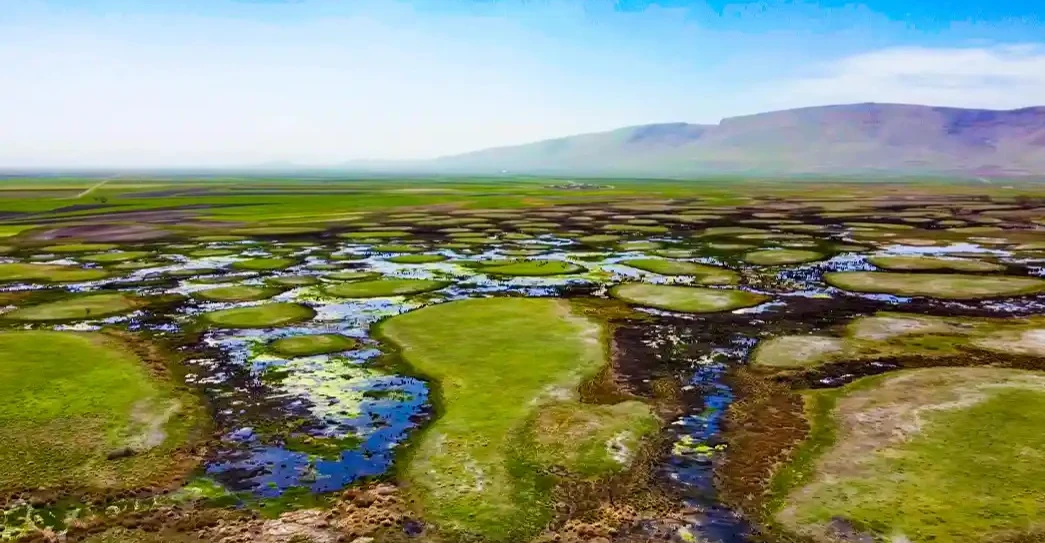
Iran's Hesilan Marsh fully recovers after 20 years of drought
🎧 Listen to this article
A dedicated English MP3 is generated for this article.
0:000:00
Tap listen to prepare the audio.
TEHRAN, Iran — TEHRAN — Iran's Hesilan Marsh in Kermanshah province has regained its ecosystem and biological activity after roughly two decades of severe drought, environmental and water management authorities announced Wednesday. The recovery followed a comprehensive management plan in the western province, where authorities sealed 200 illegal wells that had been depleting groundwater resources and pumped approximately 5 million cubic meters of water from the nearby Razavar River.
The marsh sits in the vegetation belt of the Zagros Mountains and contains more than 110 small islands. It plays a role in recharging groundwater and regulating the local climate. Behram Darvishi, director general of the Kermanshah Regional Water Company, said the closure of high-discharge unauthorized wells reduced pressure on underground reserves.
Said Dezfuli Nejad, the provincial director general for environmental protection, said the return of migratory birds and the revival of vegetation have stabilized the ecological situation. Authorities are now working to meet the standards required for the marsh's inclusion in the international Ramsar Convention on Wetlands and are planning sustainable ecotourism development and a transition to modern irrigation systems to support local economic growth.