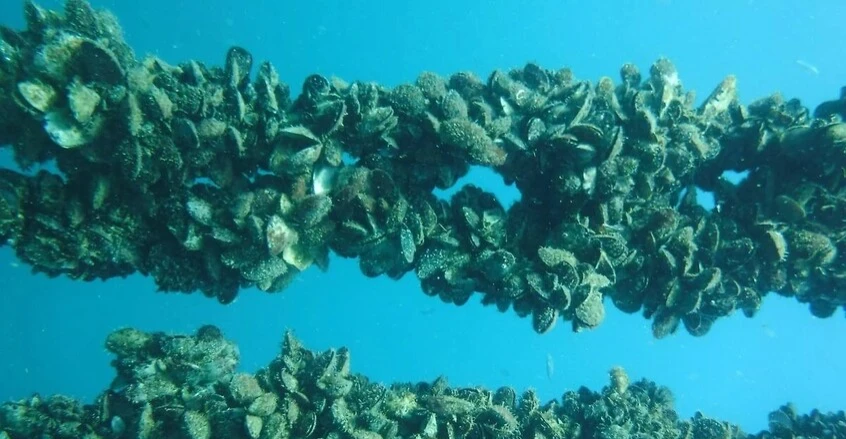
Black Sea mussels found changing sex under heat and pollution stress
🎧 Listen to this article
A dedicated English MP3 is generated for this article.
0:000:00
Tap listen to prepare the audio.
Scientists at Russia’s Institute of Marine Biology have documented mussels changing sex in response to environmental stress, presenting what they describe as the first direct experimental evidence that heat and heavy-metal pollution can alter the sex of the bivalves.
Researchers at the institute’s Vidodiya Research Center said laboratory experiments showed that some female mussels either converted into males or developed into hermaphrodites capable of producing both male and female reproductive cells when exposed to elevated temperatures combined with heavy-metal contamination. The study found that the scale of the effect varied depending on the age of the mollusks.
Mark Popov, a researcher in the institute’s Department of Aquaculture and Marine Pharmacology, said the work provides the first direct experimental proof that thermal stress can trigger sex reversal in mussels. He added that environmental pressures could do more than raise mortality rates, potentially reshaping reproductive systems and leading to fewer females and reduced reproductive capacity overall.
Marine biologists warned that semi-enclosed bays and areas near urban centers, where rising temperatures and pollution overlap, could face mounting pressure on mussel populations. The researchers cautioned against describing the situation of Black Sea mussels as a disaster on the basis of a single study, saying further research is needed to determine how widespread the phenomenon is and what it means for the wider ecosystem. Mussels are natural filter feeders that clean surrounding water by straining particles through their gills.