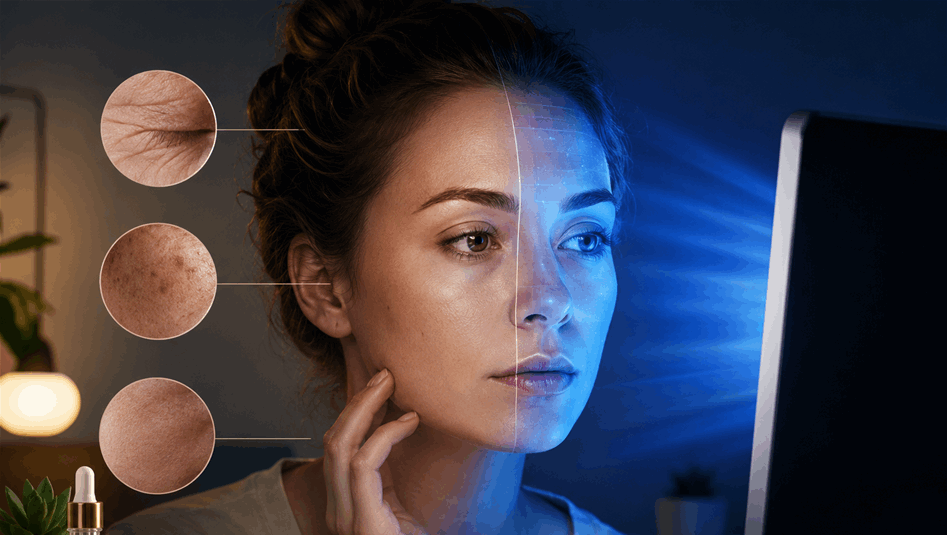
Can Screens Speed Up Skin Aging? Experts Point to Blue Light Risks
🎧 Listen to this article
A dedicated English MP3 is generated for this article.
0:000:00
Tap listen to prepare the audio.
Heavy exposure to phones, computers, tablets and televisions has become a routine part of daily life, and experts say that prolonged screen use may have indirect effects on the skin comparable in importance to sun and pollution. They warn that blue light can increase oxidative stress and weaken collagen and elastin, potentially accelerating fine lines and loss of elasticity.
Prolonged screen time is also linked to blemishes, a dull appearance and a tired-looking complexion in some people. Experts say the effect can be more pronounced when screen exposure is constant and repeated throughout the day.
Blue light may also suppress melatonin secretion and disrupt sleep patterns, which can contribute to under-eye dark circles and slow skin renewal. That combination can leave the skin looking less rested and less resilient over time.
To protect the skin, specialists recommend blue light filters, skincare products with antioxidant ingredients, night mode settings, regular moisturizing and reducing screen use before bed.