Severe solar storms could raise flight-level radiation tenfold, study finds
🎧 Listen to this article
A dedicated English MP3 is generated for this article.
0:000:00
Tap listen to prepare the audio.
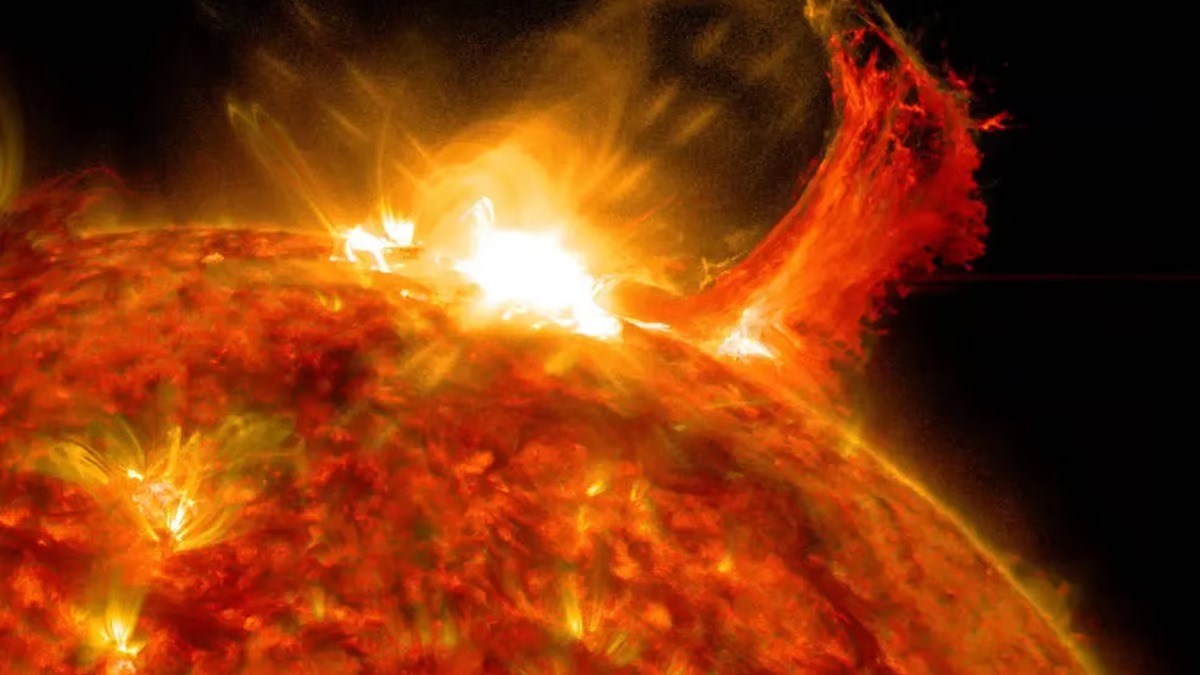
ANBAR, Iraq — LONDON — Measurements taken with balloon-borne instruments developed by the University of Surrey showed that atmospheric radiation briefly reached about 10 times the natural background level during a strong solar storm on Nov. 11, 2025, researchers said.
Commercial aircraft climbing to 40,000 feet are more exposed to high-energy particles because the atmosphere offers less shielding at cruise altitude, according to the study. The researchers said the event did not pose an immediate health risk to passengers but warned that more severe future storms could produce far greater effects.
The November 2025 storm reached only about 2 percent of the strength of the 1956 historic solar storm, which researchers said could have pushed radiation doses aboard some aircraft to more than 100 times normal levels. University modeling also indicated that high-energy particles can penetrate electronic components, potentially reaching an error rate of roughly 60 per gigabyte per hour at the storm's peak.
Flights near the polar regions face higher exposure because Earth's magnetic field provides weaker protection at high latitudes, the study noted. The researchers said the findings do not mean flights should be grounded, but point to the need for improved space-weather monitoring and forecasting systems.